De-Escalation Training for Teachers
Schedule a Consultation to explore how Pollack Peacebuilding can support your school or district with customized de-escalation training.
De-escalation training for teachers equips educators with practical, research-informed tools to recognize escalating student behavior and respond in ways that restore calm, protect relationships, and keep learning on track. Districts are seeking proactive solutions that go beyond traditional discipline by emphasizing relationship-centered strategies that help adults and students regulate emotions together. Pollack Peacebuilding Systems specializes in this approach, offering training for K–12 schools that emphasizes emotional regulation, active listening, psychological safety, and non-punitive conflict resolution. The core outcomes are straightforward: fewer classroom disruptions, improved emotional regulation for staff and students, stronger classroom culture, and a safer, more predictable school climate.

Some of our Trusted Clients



























Home > De-Escalation Training > De-Escalation Training for Teachers
On-Demand Training Course
- Approximately 90 minutes to complete
- Includes interactive practice exercises and multi-media lessons
- Includes Certificate of Completion
Need to enroll 10 or more participants? Request Bulk Order
What Is De-Escalation Training for Teachers?
De-escalation training provides your teachers with skills to manage challenging behaviors by identifying early signs of emotional or behavioral escalation and intervening before a situation reaches crisis. It helps educators read the room, noticing shifts in a student’s tone, posture, or engagement, and respond with tools that lower the temperature rather than raise it. This training supports maintaining positive learning environments where students can focus and teachers can teach.
At the foundational level, de-escalation basics include recognizing triggers, learning to stay calm, and minimizing reactive responses. More advanced classroom de-escalation strategies build on this foundation with verbal and nonverbal techniques, structured conflict resolution, and restorative conversations. Understanding the phases of escalation, from calmness to recovery, enables timely intervention.
In practice, your teachers might notice a student becoming visibly frustrated after receiving feedback and step in with reflective listening before anger builds. When two students argue during group work, teachers guide each to articulate their perspective rather than issuing commands. When a student perceives disrespect, educators use calm voices and nonjudgmental language to clarify and repair misunderstandings.
Training addresses students across all age groups and needs, including those with trauma histories, anxiety, ADHD, autism, and English language learners, without pathologizing behavior. Instead, behavior is understood as an expression of unmet needs or stress. Pollack Peacebuilding emphasizes emotional regulation, active listening, psychological safety, and non-punitive approaches. Learn more about our de-escalation training programs designed to fit your school or district.
Why Schools Need De-Escalation Training
School leaders are navigating an environment where behavioral escalation, staff stress, and community expectations around discipline and safety converge daily. Your teachers face frequent behavioral challenges that can disrupt learning and increase burnout. De-escalation training supports managing student behavior proactively, reducing the need for suspensions, office referrals, and physical interventions.
These strategies align with restorative and trauma-informed practices that keep students connected to their learning communities. By preventing crises before they escalate, de-escalation training helps reduce exclusionary discipline, which research links to poorer academic and social outcomes.
Teacher burnout is both a cause and consequence of unmanaged conflict. Training empowers your staff to act early in conflicts, reducing emotional exhaustion and helping educators maintain their sense of efficacy.
Rising student mental health concerns, such as anxiety, depression, and trauma exposure, require calm, skills-based responses rather than reactive discipline. Evidence-informed de-escalation techniques promote a predictable, safe school climate rooted in psychological safety.
Investing in de-escalation training also signals to families and school boards that your district is committed to constructive, humane conflict management training for schools.
Helping Educators Respond to Challenging Behavior Without Damaging Relationships
Key Outcomes
- 250+ teachers, counselors, administrators, and support staff participated in the training.
- 98% average training satisfaction across participant evaluations.
- 62% improvement in de-escalation and conflict management assessment scores.
- 94% of participants reported greater confidence responding to challenging student behavior.
- School leaders observed greater consistency in how staff responded to emotionally charged situations across campuses.
Core De-Escalation Skills Teachers Learn
Your teachers develop practical de-escalation skills that can be applied immediately in classrooms and throughout the school environment. Training helps educators recognize early signs of agitation and use verbal and nonverbal techniques to manage classroom tensions effectively. Behavior tracking enables intervention before crises occur, fostering a safer learning space.

Active Listening & Empathic Communication
Teachers learn to reflect feelings, paraphrase concerns, and ask open-ended questions that help students feel heard. These skills reduce tension, strengthen relationships, and guide conversations toward productive problem-solving.
Emotional Regulation for Educators
Staff learn to recognize stress signals and use practical regulation techniques such as controlled breathing and cognitive reframing. A calm, regulated adult is often the most effective de-escalation tool in a classroom.
Verbal De-Escalation Techniques
Educators practice respectful language, offering choices, setting clear boundaries, and using "I" statements. These approaches promote cooperation without relying on intimidation or power struggles.
Nonverbal Communication & Body Language
Teachers learn how posture, eye contact, physical distance, and other nonverbal cues influence student behavior. Awareness of cultural differences helps prevent misunderstandings and supports trust.
Conflict Resolution Skills
Structured conflict resolution tools help students move from blame and frustration toward shared understanding, collaborative problem-solving, and practical agreements.
Restorative Conversations & Relationship Repair
Educators learn restorative practices that focus on accountability, reflection, and repairing harm. These conversations strengthen classroom culture and reduce repeated behavioral challenges.
Common Classroom Situations That Benefit From De-Escalation Skills
De-escalation strategies are effective across everyday situations—whether in classrooms, hallways, cafeterias, buses, or after-school events. Your staff will be prepared to respond to student outbursts, defiance, peer conflicts, emotionally dysregulated students, and parent-teacher tensions with confidence and care.
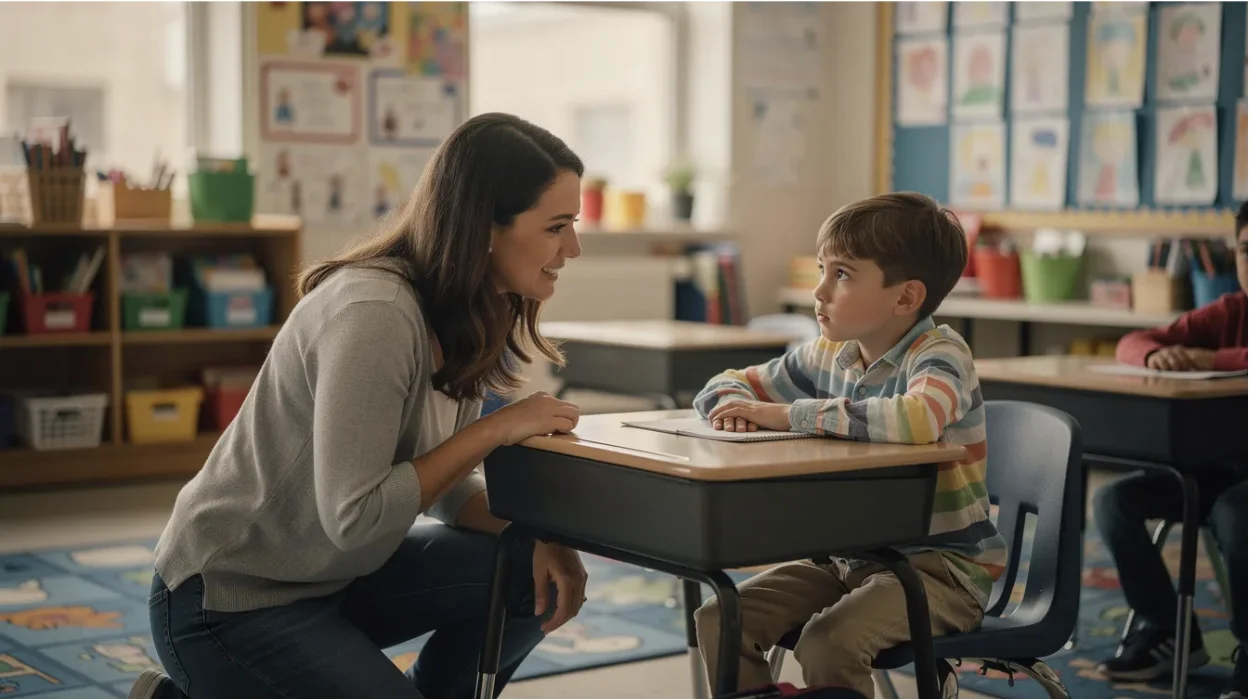
Pollack Peacebuilding’s Approach to Teacher De-Escalation Training
Pollack Peacebuilding Systems, founded by Dr. Jeremy Pollack, offers a distinct approach to teacher de-escalation training centered on addressing root causes rather than surface behaviors.
Root Causes Instead of Surface Behavior
Behavior often signals stress, frustration, unmet needs, or conflict. Our training helps staff understand these underlying factors so they can respond effectively, thoughtfully, and compassionately.
Relationship-Centered De-Escalation
Students regulate better when they feel heard and respected. Our approach emphasizes building trust, connection, and psychological safety through empathetic communication and relationship-building.
Practical Classroom Application
Teachers leave with concrete techniques they can apply immediately, supported by interactive exercises and real-world school scenarios tailored to your district’s context.

Conflict Resolution Expertise
Dr. Jeremy Pollack’s background in conflict resolution and peacebuilding informs a research-based curriculum that integrates emotional regulation, active listening, and restorative practices into everyday classroom management.
Learn more about Pollack Peacebuilding’s de-escalation training and how it can transform your school culture.
Training Formats for Schools and Districts
Pollack Peacebuilding offers flexible training options designed to fit your school or district’s schedule, budget, and goals. All formats prioritize practical application and provide tools your teachers can use immediately.
Benefits for Teachers, Students, and Schools
The positive impacts of de-escalation training extend across your entire school community.
Teachers experience reduced stress, increased confidence, and stronger teamwork. Shared language and strategies improve relationships and reduce blame after incidents.
Students benefit from calmer, more predictable responses that support their emotional regulation and psychological safety. Restorative approaches offer opportunities to repair harm and build empathy, improving engagement and academic success.
Training supports safer campuses, more equitable discipline, and improved school climate data. It reduces costly interventions and supports staff retention by demonstrating commitment to professional development and well-being.
Ready to equip your teachers with practical de-escalation strategies? Contact Pollack Peacebuilding to discuss a customized training solution for your school or district.
Frequently Asked Questions About De-Escalation Training for Teachers
All school staff who interact with students, including teachers, counselors, support staff, and administrators, benefit from this training.
Yes. We tailor content to your district’s priorities, grade levels, community context, and existing initiatives such as PBIS, SEL, or restorative justice.
Both onsite workshops and live virtual sessions are available to accommodate your district’s needs.
Yes. Documentation is provided for professional development records and district reporting.
By reducing conflict and exclusionary discipline, the training fosters safer, more supportive environments where students and staff thrive.
Schedule a Consultation for De-Escalation Training
If your school or district is facing challenges with student behavior, staff stress, or discipline practices, Pollack Peacebuilding is ready to partner with you. We work collaboratively to assess your needs and design customized programs that fit your context and resources.
Contact us by phone, email, or through our online consultation form to start the conversation about how teacher de-escalation training can transform your school culture and support your educators.
Investing in effective classroom conflict resolution and educator professional development today builds safer, more connected learning environments for tomorrow.